
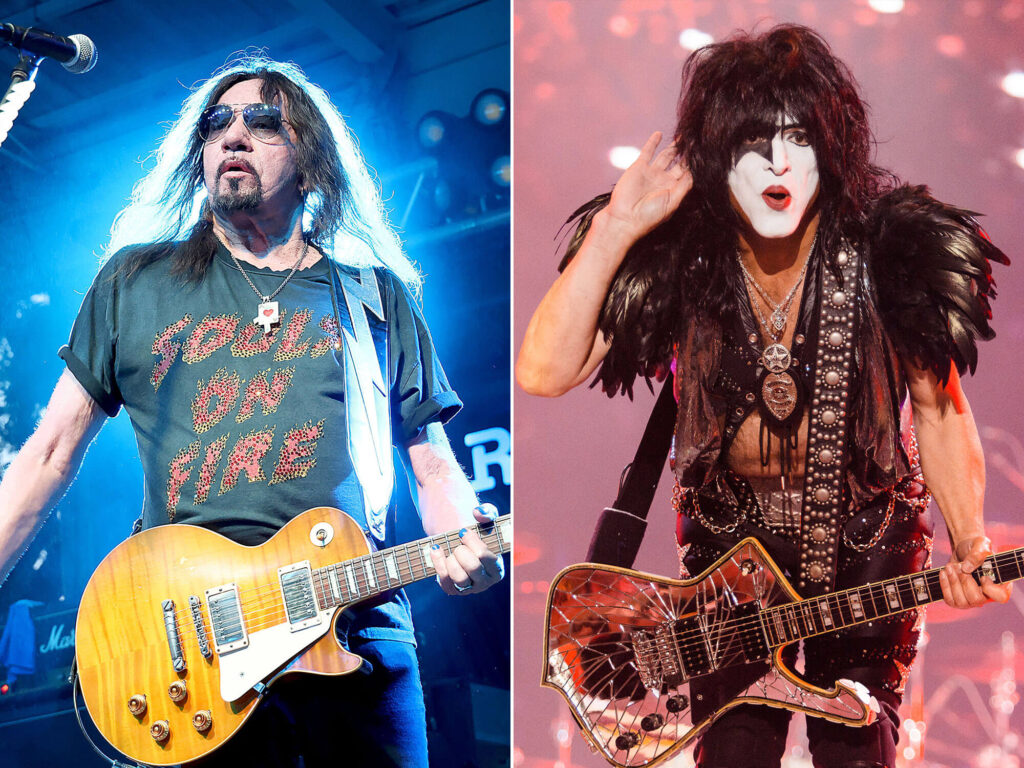
Ace Frehley’s passing hit a lot of rock fans like a punch to the chest. On October 16, 2025, the original KISS guitarist died at 74 after complications from a fall at his home. For people who grew up on KISS records, oversized stage shows, and guitar heroes who looked like they came from another planet, this was not just another celebrity death. It felt like the end of a very specific kind of rock and roll myth.
A lot of bands had louder records. A lot of guitar players had cleaner technique. But Ace had something harder to fake. He sounded loose, dangerous, melodic, and completely himself. And that is a big reason Ace Frehley’s passing still feels personal months later. He was one of those players who made a kid want to pick up a guitar first and ask questions later.
What happened in Ace Frehley’s final weeks
The basic facts are sad and pretty simple. Frehley had canceled shows in late 2025 because of health issues after a fall. When his family announced his death on October 16, they described a peaceful final moment surrounded by loved ones. Later reporting confirmed that the medical examiner ruled his death an accident caused by blunt trauma injuries to the head after a fall.
That detail matters, but only up to a point. The bigger story is that a life that helped shape 1970s hard rock came to an end. News like this can get turned into rumor, noise, and social media junk fast. In this case, the reporting from major outlets lined up on the key facts, and the family statement made it clear that Frehley had passed away and that the loss was devastating for the people closest to him.
Why Ace mattered so much to KISS
It is hard to talk about KISS without talking about image. Face paint. Costumes. Fire. Blood. The whole huge comic-book thing. But if the band had only looked cool, none of it would have lasted. The music had to land too. Ace was a big part of why it did.
He co-founded KISS with Paul Stanley, Gene Simmons, and Peter Criss in 1973. As the band’s original lead guitarist, he helped build the sound that turned KISS into one of the defining hard rock acts of its era. His playing gave the band lift. Not in a polished, studio-perfect way. More in a street-level, turn-it-up way. The riffs had swagger, and the leads felt like they were reaching for the ceiling.
He was also central to the band’s personality. On stage, the Spaceman character could have come off as gimmicky in lesser hands. With Ace, it worked because he seemed to enjoy the absurdity of it while still playing like he meant every note. That mix mattered. KISS was theater, sure, but Ace made the theater sound dangerous instead of cute.
And then there are the songs fans still bring up first. “Cold Gin,” “Parasite,” and “Shock Me” are not footnotes. They are part of the band’s core DNA. Even people who only casually know KISS tend to understand that Ace’s contributions were not decorative. He was one of the reasons the original lineup became the lineup people kept measuring every later version against.
Ace Frehley’s passing sends fans back to the music
One thing that happens when a major artist dies is that people go back and listen again. Not out of habit. Out of need. Ace Frehley’s passing did that too. Fans went back to the KISS records, but they also went back to his solo work, which matters because Ace was never just a former band member living on old glory.
His 1978 solo album, Ace Frehley, remains a key piece of his story. “New York Groove” became his signature solo hit and reached No. 13 on the Billboard Hot 100, which is still the kind of chart fact that makes people stop and go, right, he really did have his own lane. He later built a strong post-KISS identity with Frehley’s Comet and kept releasing solo material over the years.
And that story did not end decades ago. Frehley was still making music late in life. His 2024 album 10,000 Volts showed that he was still interested in recording, still interested in sounding like himself, and still connected to the fans who had stayed with him through every version of his career.
That matters. Some artists become frozen in one era. Ace never fully did. Even when the conversation kept circling back to 1977, 1978, or the reunion years, he kept moving.
The guitar style that made Ace unmistakable
I think this is the part that explains why other musicians reacted so strongly to his death. Ace Frehley was not the kind of player people admired only because of speed or theory. He was admired because you could hear him in a few notes.
His leads had attitude. His vibrato had wobble and force. His phrasing sounded like someone pushing the song around a little, testing it, making it feel alive. Some guitarists sound like they are solving a problem. Ace sounded like he was starting one, in the best possible way.
That kind of style tends to leave fingerprints all over later generations. Tom Morello has said Ace was his first guitar hero. Other players across hard rock and metal have pointed back to Frehley too, not because they copied him exactly, but because he helped make guitar playing feel exciting, visual, and personal. He reminded people that tone, touch, and identity matter. Sometimes more than being perfectly clean.
There is also a lesson here that younger players still pick up on. Ace did not come across like a machine. He sounded human. Flawed in places, loose in places, and memorable almost everywhere. That is a huge part of rock music, even if not every modern conversation wants to admit it.
Why this loss feels bigger than one musician
Ace Frehley’s passing also feels larger because of what he represented. He was the first of KISS’s original members to die. That turns one musician’s death into the close of an era, or at least the end of the illusion that the original four would always still be somewhere out there, arguing, touring, reminiscing, or doing something chaotic.
Fans do not just grieve the person in cases like this. They grieve the version of themselves that came with the music. The first time they heard Alive!. The first time they saw the makeup. The first cheap guitar they wanted because Ace made the electric guitar look like the center of the universe.
And that is why the tributes had real weight. Former bandmates, other guitar players, and music publications all came back to the same basic point. Ace was essential. Maybe not tidy. Maybe not easy. But essential. Rock history is full of polished figures who fit neatly into a story. Ace never quite did, and that made him more interesting.
The legacy Ace leaves behind
Legacy is a word people throw around too easily after someone dies. But it fits here.
Ace helped define what arena rock could look and sound like. He helped make KISS into something way bigger than a normal band, while still grounding that giant image in riffs and solos people actually wanted to hear. He had solo success outside the band. He made songs that lasted. He influenced players who went on to influence other players. And he stayed a live presence in rock culture long after the peak commercial years had passed.
The Rock and Roll Hall of Fame induction in 2014 mattered because it officially locked in what fans already knew. Ace Frehley belonged in that story. Not on the edges. Right in the center of it.
If you want the quickest way to understand his impact, you do not need a full documentary. Just listen to the crackle and swagger in the old KISS material, then jump to “New York Groove,” then jump forward to 10,000 Volts. The through line is still there. It is not perfection. It is personality.
Final thoughts on Ace Frehley’s passing
Ace Frehley’s passing closed the book on one life, but it did not shrink his presence. In some ways, it made it clearer. Strip away the costumes, the lore, the backstage drama, and the years of reunion talk, and what is left is a guitarist who mattered because he had a voice. Not a singing voice only, though he had that too. A guitar voice. One you could hear from across the room.
That is rare. And it is why fans are still talking about him, still playing his parts, still arguing over favorite solos, and still feeling this loss months later.
In the end, maybe that is the clearest measure of Ace Frehley’s passing. It was not just sad news. It was the kind of loss that sends people back to the records to remember why they cared in the first place.