
This Ace Frehley obituary tells the story of a guitarist who never sounded like anyone else, and honestly, never seemed interested in doing so. Ace Frehley, the founding lead guitarist of KISS and the man fans knew as the Spaceman, died on October 16, 2025, at the age of 74, following injuries from a fall at his home. That is the hard fact. The bigger truth is that rock just lost one of its real originals.
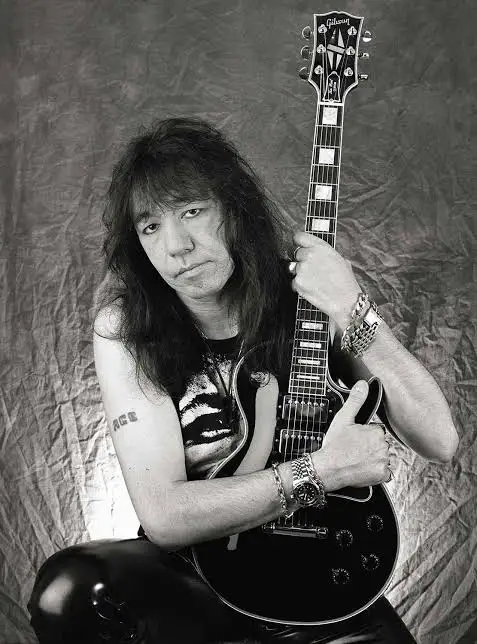
For a lot of fans, Ace was not just part of KISS. He was the spark in the machine. The look mattered, sure. The makeup, the smoking guitar, the cosmic persona, the whole oversized spectacle. But underneath all of that was a player with touch, swagger, and a loose, dangerous feel that made even simple riffs sound alive. Some guitarists sound trained. Ace sounded like trouble, and in rock music, that can be a gift.
Born Paul Daniel Frehley in the Bronx on April 27, 1951, he came out of New York with the kind of attitude that fit hard rock perfectly. When KISS formed in 1973, Frehley became a central piece of the band’s sound and image. He did not just help define the music. He helped define the mythology. His Spaceman character gave KISS one of its most memorable identities, and his work on guitar gave the band real weight behind the theater.
The guitarist who made KISS feel dangerous
KISS was never a subtle band. That was part of the fun. But for all the fire, blood, makeup, and noise, the group still needed real guitar hooks to make the songs stick. Ace Frehley gave them that. He played with feel first. Precision was there when it needed to be, but what fans really heard was attitude.
There was always a little bend in his phrasing, a little extra push in the solo, a little sense that the whole thing might jump the rails in the best possible way. He did not sound sterile. He sounded human. And when KISS hit its stride in the 1970s, that mattered a lot.
Ace also helped shape the visual language of the band. He played the Spaceman, later known simply as the Spaceman, and carried that role so naturally that it never felt borrowed or forced. He looked like a comic book character, but he played like a street-level rocker. That contrast made him memorable. It still does.
And there is another detail that fans have always loved. Frehley also played a part in designing the famous KISS logo. That fits, honestly. He was never just standing inside the band’s legend. He helped build it.
Ace Frehley obituary and the solo career that proved the point
No Ace Frehley obituary is complete without talking about what happened when he stepped outside KISS and showed people that the talent was real on its own.
His 1978 solo album, Ace Frehley, became the standout of the four KISS solo records released that year. It gave him his signature solo hit, “New York Groove,” a song that still feels tied to his identity decades later. It was flashy, catchy, a little grimy, and completely right for him. You could hear the city in it. You could also hear why Ace connected with people who were not even hardcore KISS fans.
That solo success mattered. It proved he was not just the lead guitarist in face paint. He could carry a record, carry a song, and carry an audience on personality alone. Later came Frehley’s Comet, Anomaly, Space Invader, Origins Vol. 1, Spaceman, Origins Vol. 2, and finally 10,000 Volts in 2024. He kept recording because that is what lifers do. They keep making noise.
One of the more impressive late-career moments came with Space Invader, which reached the Top 10 on the Billboard 200. That was not just a nostalgia bump. That was proof that people still wanted to hear Ace Frehley, not as a memory, but as a living artist with something left to say.
He also had the kind of long career that reminded people how influence works. First, you change the sound of a band. Then you influence other guitarists. Then those guitarists influence more players after them. By the time enough years pass, your style is all over the genre, even when people do not realize where it came from.
More than makeup, more than myth
It would be easy to write about Ace Frehley like he was only a character. The makeup invites that. The nickname invites that. The stage show really invites that. But that would shrink him too much.
The man behind the character was funny, reckless, gifted, stubborn, and often very honest about his own flaws. He had a long public history of conflict, excess, and hard living. He also had the kind of resilience that kept bringing him back. That mix was part of why fans stayed attached to him. He was not polished into something neat and easy. He was messy in the way a lot of real rock stars were messy. People recognized that.
And while KISS often operated like a machine, Ace always felt like the loose wire inside it. That tension shaped his whole public image. He could be unpredictable, sometimes frustrating, often brilliant. In a strange way, that is part of why so many people loved him. He felt less like a product and more like a person who somehow got dropped into one of the biggest bands in rock history and then decided to light the whole thing up from the inside.
There are plenty of technically stronger guitarists. That is fine. Rock history is not only built on technique. It is built on identity, timing, feel, and that thing you cannot really teach. Ace had that thing.
What Ace Frehley leaves behind
Ace Frehley was inducted into the Rock & Roll Hall of Fame with KISS in 2014, and that recognition was deserved. He helped create one of the most recognizable bands on earth. He helped create one of the most recognizable characters in rock. And most important, he helped create music that still sounds like itself.
That matters more than image, more than branding, more than almost anything else. A riff either lasts or it does not. An artist either leaves fingerprints on the culture or disappears into the crowd. Ace left fingerprints everywhere.
He is survived by his wife Jeanette, his daughter Monique, his brother Charles, his sister Nancy Salvner, and extended family. For them, this loss is personal in a way fans can never fully touch. For the millions who grew up with his records, posters, live clips, and solos, the loss lands differently but still lands hard.
Any Ace Frehley obituary worth reading has to end with the same plain truth: he was one of one. He brought danger, humor, looseness, melody, and style into a band built for giant stages, and somehow he still came across like the coolest guy in the room. Not because he chased that image too hard, but because it seemed to happen on its own.
The Spaceman is gone. The sound is not.